
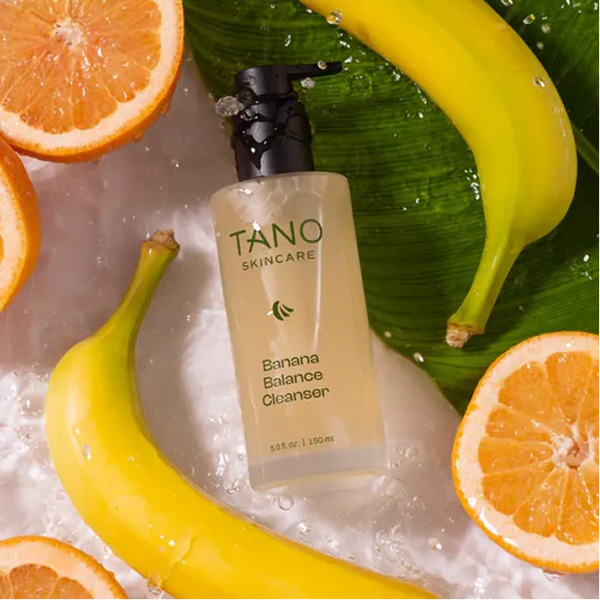
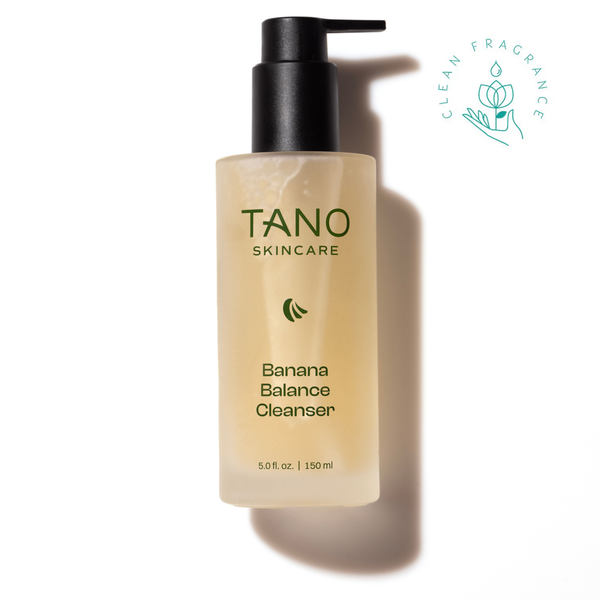
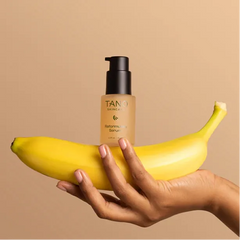
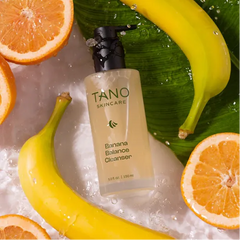



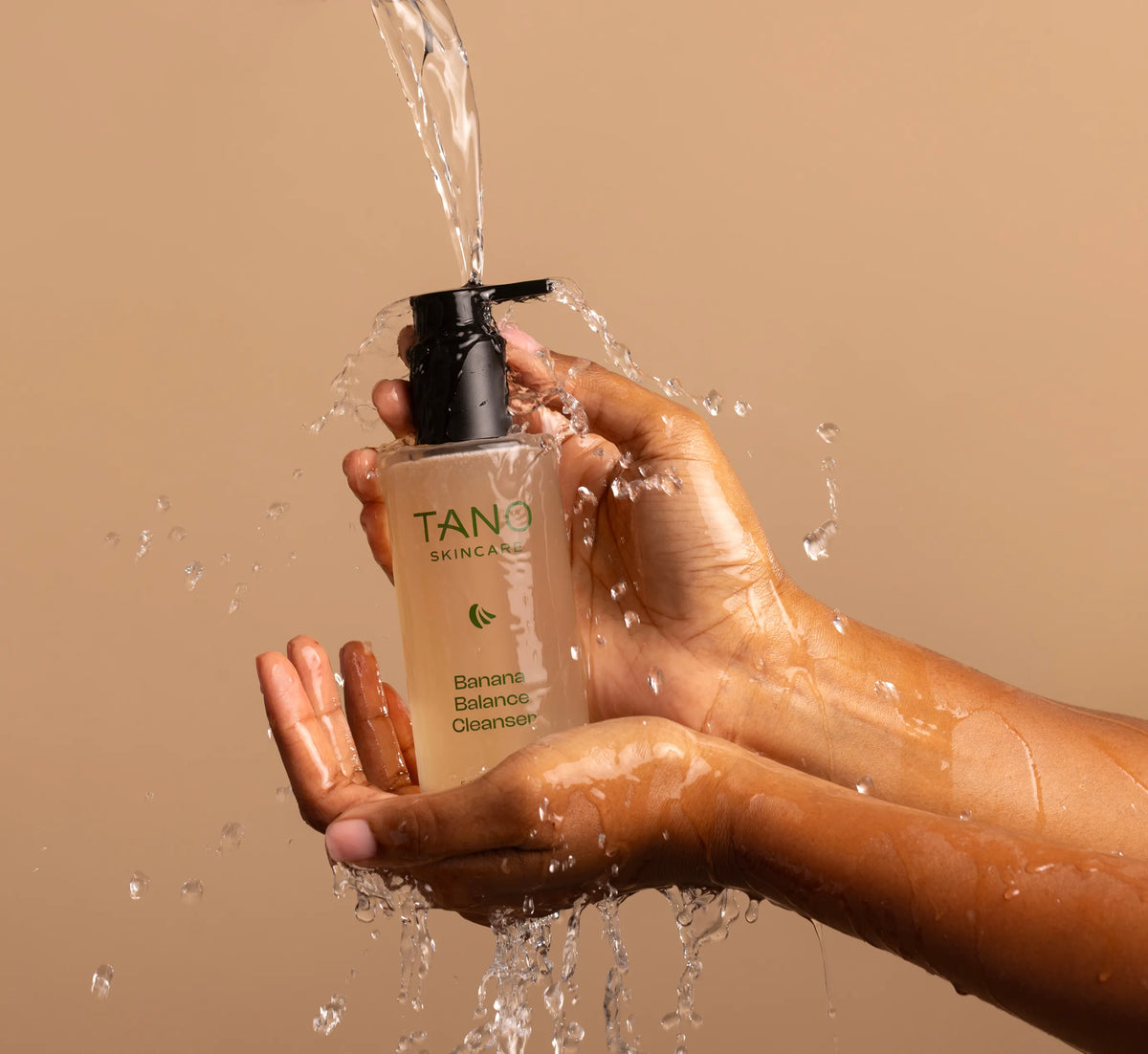
Banana Balance Cleanser
A refreshing gel cleanser that removes impurities and excess oil while supporting skin’s barrier. With banana sap, chia seed oil, and gentle exfoliating acids, it smooths texture, refines pores, and leaves skin balanced, comfortable, and primed for your routine.
A refreshing gel cleanser that effectively lifts makeup, excess oil, and impurities without stripping the skin barrier.
With banana sap, chia seed oil, and gentle exfoliating acids, it smooths texture, refines pores, and leaves skin balanced, comfortable, and primed for your routine.
Lightly scented with a clean grapefruit note from Sozio, it delivers a fresh, uplifting cleanse that feels as good as it performs.

Cleansing

Immediate + long-term moisture

Smooths skin

Strengthens + protects
60-Day Money-Back Guarantee
Try it risk-free on your first order. Not in love? We'll refund you, no questions asked.

Free Shipping Over $70

60-Day Easy Returns

Meets EU Cleanliness Standards

Third-Party Clinically Tested
Complete your routine
Complete your routine
THE CLEANSE IN 3 STEPS
What happens during a wash, in three steps.

STEP 01
LIFT
Banana sap: naturally rich in antioxidants and minerals that lift impurities while reinforcing barrier.

STEP 02
REFINE
Lactic + Salicylic Acids: dual gentle exfoliators that clear pores, remove buildup, and keep texture even without dryness.

STEP 03
RESTORE
Nutrient-dense botanicals replenish hydration levels, leaving skin feeling soft and deeply nourished.
Collagen Doesn’t fade. It Drops.
From your 20s onward, collagen production naturally declines in both women and men. But the way it declines is not the same.
Men start with slightly higher collagen levels and lose it gradually over time.
Women experience a fundamentally different pattern. During menopause, collagen loss accelerates sharply, followed by a permanently faster rate of decline.
This chart shows how collagen changes across life stages, and why skin doesn’t just age. It transitions.
- Male
- Female
American Academy of Dermatology Association. (s.f.). Skin care during menopause.
Berman, B. (2008). Skin health of the elderly and people in long-term care. Journal of Drugs in Dermatology, 7(2 Suppl), s12–s16.
Quan, T., Qin, Z., Balimunkwe, R. M., & Fisher, G. J. (2017). Age-related reduction of dermal fibroblast size up-regulates multiple matrix metalloproteinases as observed in aged human skin in vivo. British Journal of Dermatology, 177(5).
Trusted by thousands of customers
Made with patented Banana Sap
Extremely low refund rate
Clinically tested formulations
KEY INGREDIENTS
Our commitment to quality starts with our ingredients.


Confidence at every step.
Clinically Tested. Designed for Sensitive Skin.
Every Tano formula is created to support skin health with clinically tested, barrier-first ingredients — without harsh actives or unnecessary irritation.
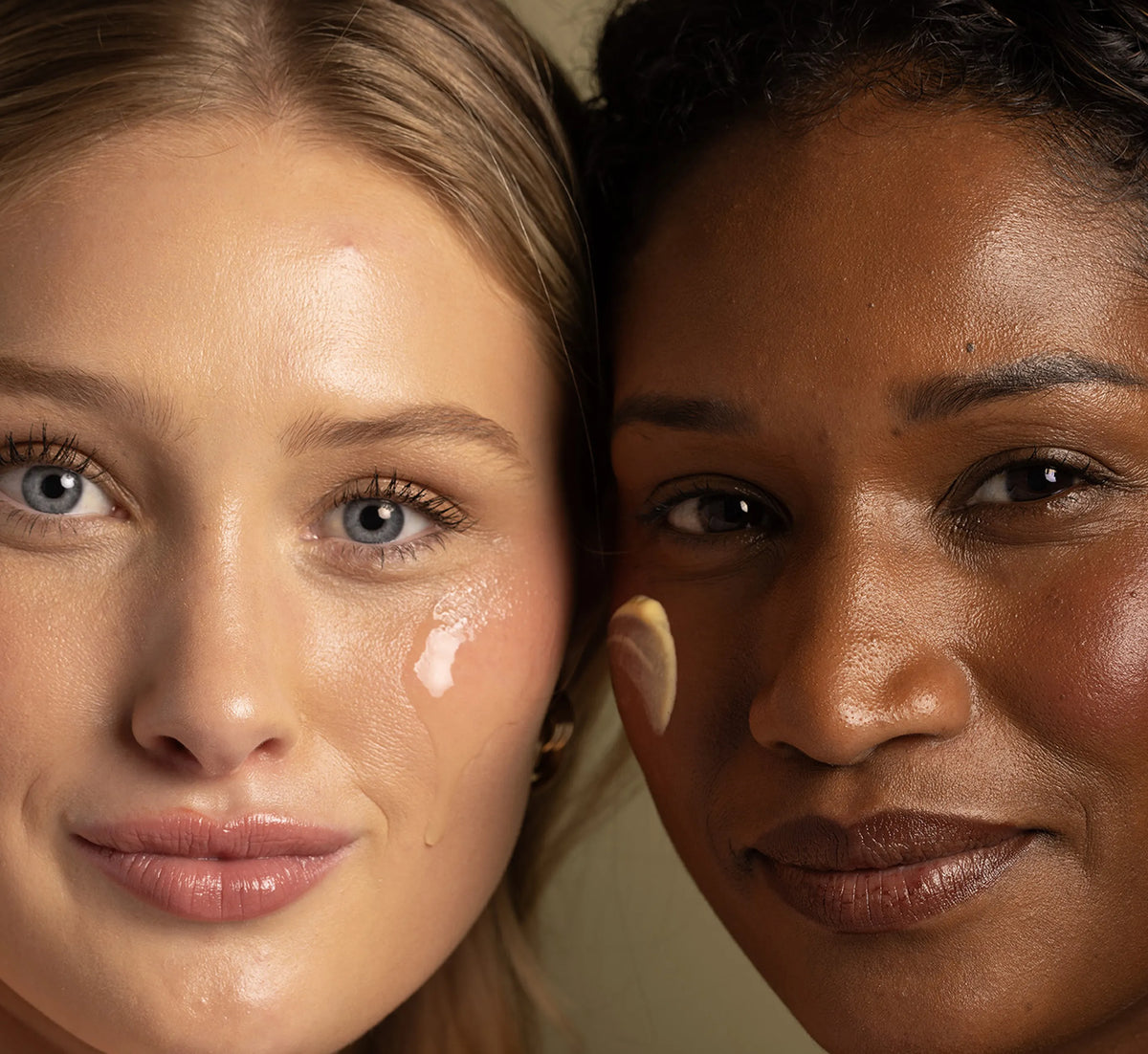
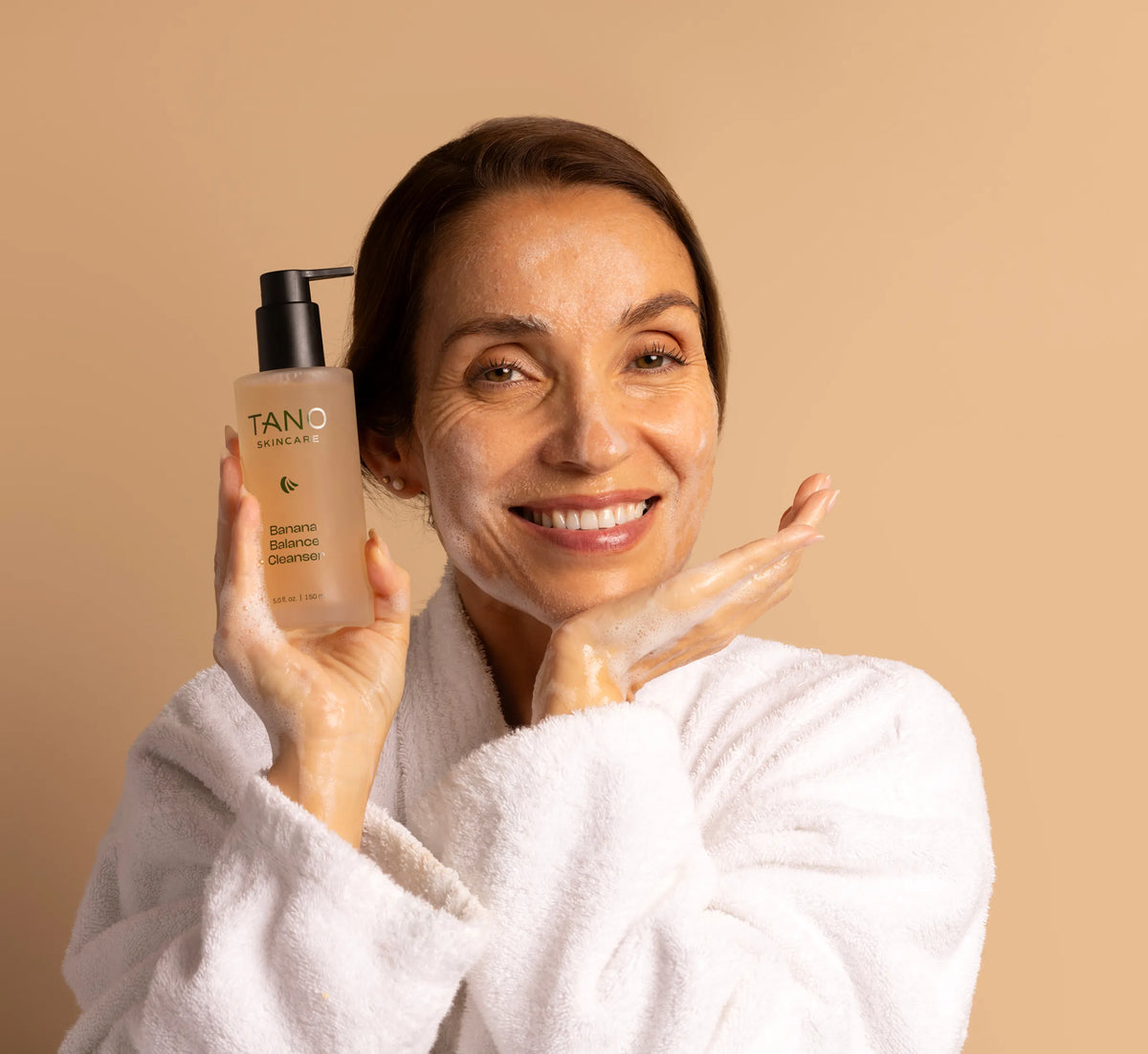
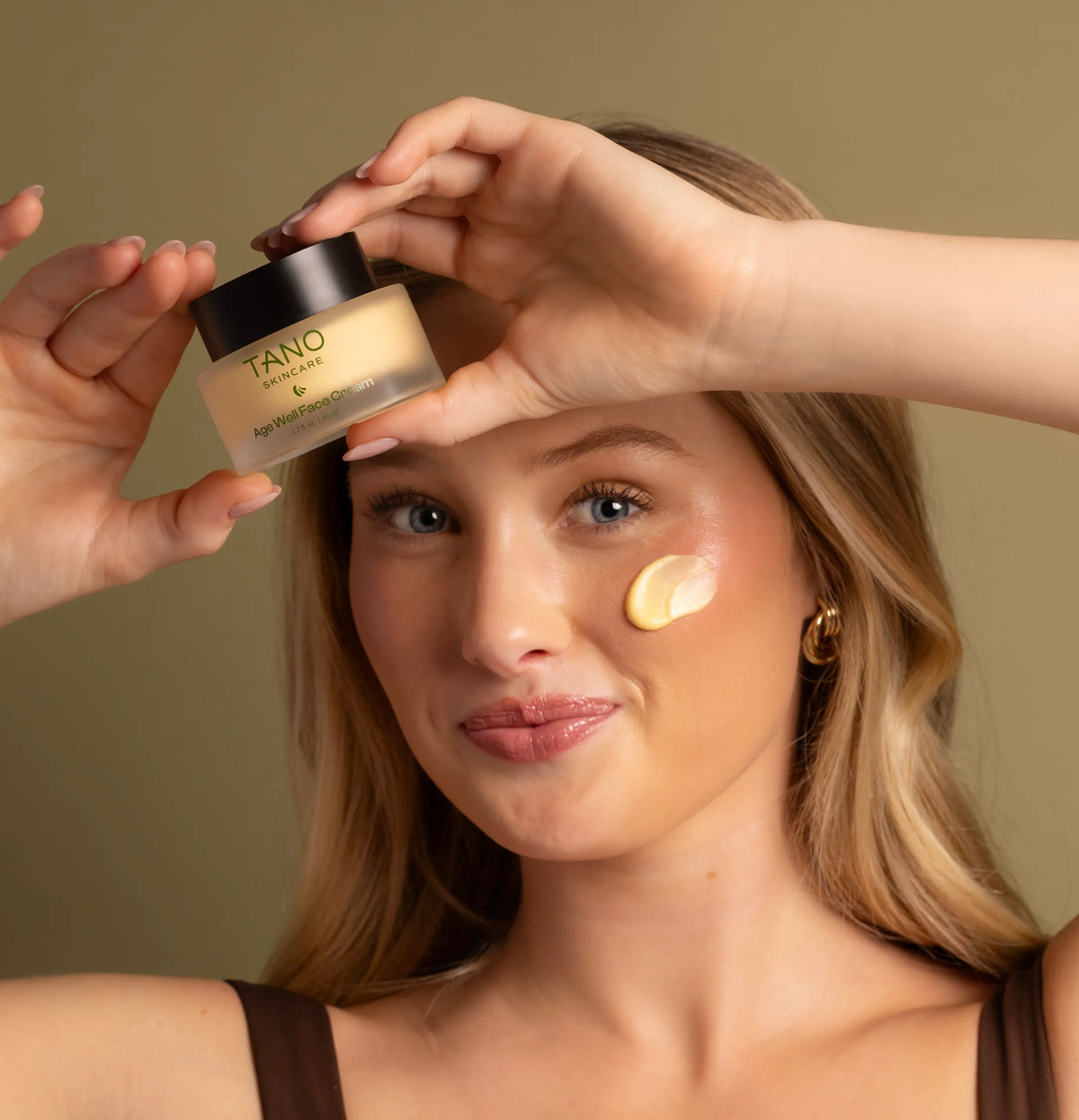
TANO WAS BUILT SO YOU DON'T
HAVE TO CHOOSE.
Most skincare brands force a tradeoff. Clinical brands often deliver results with irritation. Natural brands protect the skin, but rarely change it.
EU-Level Clean Standards
Meets strict European cosmetic safety requirements.Naturally Derived, High-Performance Actives
Botanical actives selected for efficacy, not trend.Designed for Sensitive Skin
Formulated to minimize irritation and reactivity.Barrier-First Formulation
Strengthens the skin barrier, not just surface symptoms.Built for Daily, Long-Term Use
Safe for consistent use without cycling or recovery periods.Clinically Tested for Efficacy
Formulated and tested to deliver measurable results.Science You Can Understand
Biological pathways explained without marketing buzzwords.Clinical-Grade Actives
Proven actives used at effective, skin-tolerant levels.Focused on Visible Skin Improvement
Targets texture, firmness, hydration, and resilience.Results Without Active Tradeoffs
Visible results without redness, peeling, or barrier damage.FAQ
Your questions, answered.
Clear answers to the most common questions about our products, ingredients, and how Tano works with your skin.
Are Tano products suitable for all skin types?
Tano products are formulated to work across all major skin types, including dry, oily, combination, mature, and sensitive skin.
Our formulas are built to deliver visible improvement without relying on aggressive ingredients that compromise the skin barrier. Many customers who previously struggled with irritation, redness, or dryness from conventional anti-aging products find Tano easier to use consistently.
Because every person’s skin is unique, we always recommend patch testing before full use.
How long does it take to see results?
Many customers notice early changes in hydration, comfort, and skin texture within the first 1 to 2 weeks.
More meaningful visible improvements, including smoother appearance, improved tone, and softening of fine lines, typically develop over 4 to 8 weeks with consistent daily use.
Tano is designed to support the biological processes of the skin, so results build progressively over time rather than creating short-term surface effects.
Is Banana Sap a replacement for retinol?
Tano is not positioned as “natural retinol.” We developed something fundamentally different.
In laboratory testing, Tano’s banana sap ingredient demonstrated a 325% increase in collagen production, compared to approximately 80% commonly reported for retinol, without the irritation, peeling, or sensitivity often associated with retinoids.
Some customers transition away from retinol entirely. Others use Tano alongside it to support daily skin function and barrier health.
Can I use Tano products every day?
Yes. All Tano products are formulated for daily, long-term use.
They are designed to support skin function and resilience, making them suitable for both morning and night routines. Consistent use is what drives the most noticeable and lasting improvements.
Is Tano safe for sensitive skin?
Yes. Sensitive skin is one of the main reasons Tano exists.
Tano formulas go through extensive safety and stability testing, including HRIPT testing, and are reviewed by our medical advisor. They’re built to deliver visible change without overwhelming the skin.
Many of our customers came to Tano because other “anti-aging” products left them red, dry, or irritated. If you read our reviews, you’ll see this theme over and over: skin that finally feels calm, comfortable, and supported, while still improving in how it looks.
We always recommend patch testing, but Tano was built for long-term, daily use, even for reactive skin types.
Has Tano been dermatologist tested?
Tano products are extensively safety and stability tested and medically reviewed as part of our development process.
While skincare is personal and dermatologists will always differ, our approach is rooted in medical-grade formulation standards, not trend-driven cosmetics. Our focus from day one has been skin function first, aesthetics second.
Is Tano pregnancy-friendly?
Tano products are formulated without retinoids and without many of the ingredients people are commonly told to avoid during pregnancy.
They are designed to support skin comfort, hydration, and resilience and have been thoroughly safety reviewed and tested. Many customers choose Tano specifically during pregnancy because it offers performance without harshness.
As always, we recommend confirming any skincare routine with your healthcare provider.
Do you test on animals?
No. Tano products are cruelty-free and are not tested on animals.
What makes Tano different from other skincare brands?
Tano began with an injury, not a product idea.
After a childhood accident that nearly cost our founder his leg, banana sap was used in a remote setting to stop the bleeding and protect the wound. That experience never left him.
Years later, it turned into an obsession. Tano originally started as a medical research effort focused on wound environments, burns, and first-aid applications. The goal was to understand how banana sap interacted with skin under extreme stress.
As the research evolved, something unexpected emerged. Banana sap was powerfully activating pathways tied to collagen production, barrier function, and skin recovery.
Skincare wasn’t the plan. It became the inevitable direction.
Today, Tano operates as natural clinical-grade skincare, built to support how skin actually functions. We bridge the gap between gentle-but-ineffective and effective-but-harsh. Every formula is rooted in biological performance, not trends.
What exactly is banana sap?
Banana sap is the living, nutrient-rich fluid found inside banana plants, specifically the “trunk” of the tree.
Tano uses whole, raw banana sap, not isolated compounds. Through a proprietary stabilization process, we preserve its activity so it can be safely used in skincare without stripping away what makes it biologically interesting.
This work led Tano to formally register banana sap as a cosmetic ingredient and to build patented methods around how it can be used in formulations.
What does “patented ingredient” actually mean?
Tano was the first company to research, register, and build cosmetic applications around banana sap.
Our patents cover methods for using banana sap in skincare systems, including how it can be stabilized and formulated. This protects Tano’s ability to continue developing unique products around this ingredient long-term.
Do your products contain fragrance?
Only Banana Balance Cleanser and Balbisiana Body Butter contain fragrance.
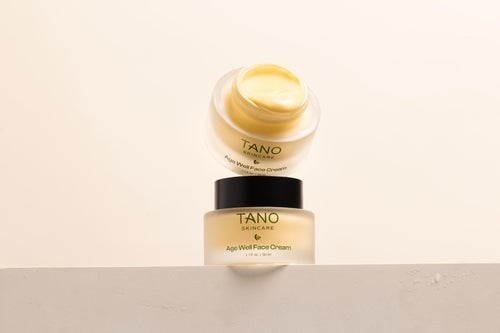
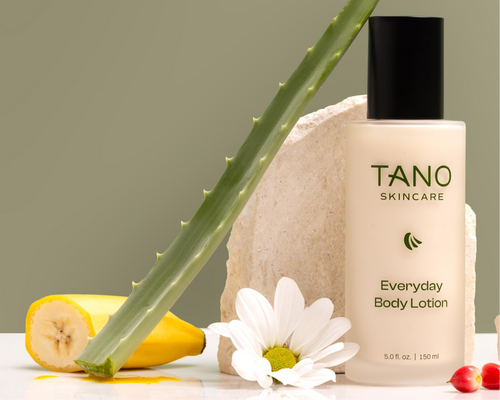
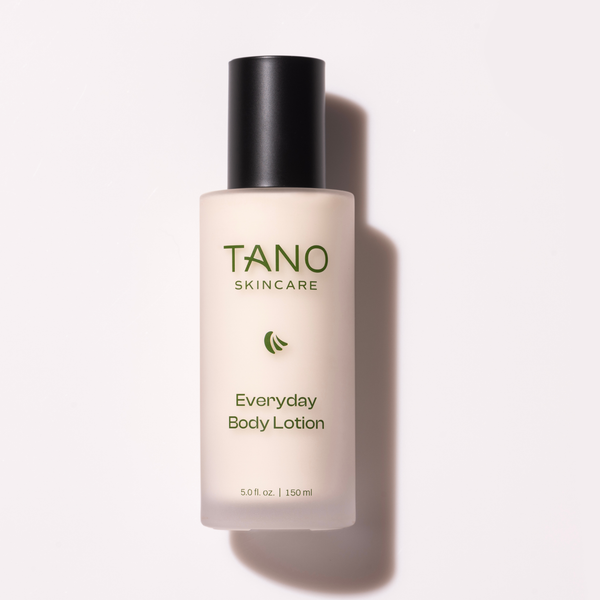
Age Well Face Cream, Everyday Body Lotion, and Reformulate Serum are fragrance-free.
When we do use fragrance, it comes from Sozio, a world-class fragrance house known for strict safety and regulatory standards that meet or exceed EU requirements. The scent is subtle, skin-appropriate, and designed to fade quickly after application.
Many customers who normally avoid fragrance still comfortably use these formulas.
Can Tano help with sensitive or reactive skin?
This is one of the most common reasons people find Tano.
A large portion of our customers come from routines that left their skin irritated, inflamed, or constantly “recovering.” In our reviews, you’ll consistently see people talk about how their skin finally feels calm, balanced, and strong, not just moisturized.
Our internal research showed banana sap interacts with biological pathways related to barrier support and inflammation regulation. That’s why Tano tends to work so well for people whose skin doesn’t tolerate conventional actives.
Tano doesn’t numb the skin. It supports it.
What about eczema-prone or highly compromised skin?
Tano is not positioned as a medical treatment. But this is one of the most common experiences customers share with us.
Many people with eczema-prone, reactive, or historically “difficult” skin say Tano is the first product they’ve used consistently without flare-ups. Our research showed activity in pathways tied to barrier function and inflammatory response, which aligns closely with what customers report feeling and seeing.
We always recommend patch testing and consulting a professional for diagnosed conditions, but real-world feedback here has been one of the strongest signals we’ve seen.
Is Tano good for aging skin and changing skin?
Yes. And not just for one stage of life.
As skin changes, whether from stress, hormones, environment, or time, its core needs become very similar: stronger barrier, better hydration, improved resilience, and support for collagen production.
Customers across many life stages talk about smoother texture, more comfortable skin, and visible improvements in firmness and fine lines. People dealing with hormonal shifts often mention that Tano feels like something their skin can finally tolerate while still delivering visible change.
Can Tano help with fine lines and loss of firmness?
In lab testing, banana sap showed strong collagen-supporting activity. In real life, customers most often describe smoother skin, softer fine lines, and skin that feels more resilient and supported.
This is one of the most consistent themes across our reviews: skin that not only looks better, but behaves better.
What is your return policy?
Refund Policy (First-Order)
We offer a 60-day satisfaction guarantee, available exclusively to first-time customers on their first order. If your first Tano product doesn't work for your skin, contact our team at hello@tanoskincare.com within 60 days of your order date and we will provide a full refund - no need to send the product back. This refund guarantee is not available on subsequent orders.
We believe skin is personal, and we stand behind giving you the time to truly experience the product.
Return Policy
If you'd like to return a Tano product and are ineligible for the 60-day first-order guarantee, it must be unopened and unused, and your request must be made within 30 days of delivery. To start a return, contact our team at hello@tanoskincare.com with photo proof that the product is unopened.
Upon receipt of the return and verification that the product is indeed unused, a refund will be issued. Review of returns and issuance of refunds will be completed within 5 business days of return arriving to Tano Skincare. The cost of return shipping will be deducted from your refund.
How long does shipping take?
Orders typically ship within 1 to 2 business days.
Standard U.S. delivery usually arrives within 3 to 5 business days after shipment.
Do you ship internationally?
At this time, we ship only within the United States.
Do you offer subscriptions?
Yes. Subscriptions are available for customers who want automatic replenishment and preferred pricing. You can modify, pause, or cancel at any time through your account.
Where does the name “Tano” come from?
“Tano” comes from the second half of the word plátano, meaning banana or plantain.
It reflects both the origin of our hero ingredient and our belief that powerful skincare can come from overlooked natural sources when approached with rigor, patience, and respect.
What category does Tano fit into?
Tano defines natural clinical-grade skincare.
We exist between traditional natural brands, which are often gentle but limited, and conventional clinical brands, which are often powerful but harsh.
Tano is built to deliver clinical-level performance through biologically supportive, naturally derived systems.
What does Tano stand for?
Tano stands for building products with integrity, patience, and biological respect.
We don’t chase trends. We invest in ingredient research, extensive testing, and formulation depth. Every product is built to support how skin actually functions, not just how it appears.


