



If you've spent any time in eczema forums or skincare research, you've probably run into the acronym IL-8. It's one of the key molecules behind the redness, swelling, and itch of a flare-up - and it's increasingly showing up in conversations about natural ingredients like banana sap. Here's what IL-8 does, why it matters for eczema, and what the current evidence on banana sap can and can't tell us.
What IL-8 Does in the Body
IL-8 (interleukin-8) is a chemical messenger, or chemokine, released by skin cells and immune cells. Its job is essentially traffic control for the immune system:
- Chemotaxis — IL-8 pulls infection-fighting white blood cells, especially neutrophils and T lymphocytes, out of the bloodstream and into the skin.
- Activation — once those cells arrive, IL-8 switches them on, prompting them to release substances that drive local inflammation and fight off microbes.
In small, controlled bursts, this is a normal and useful defense mechanism. The problem starts when the signal doesn't turn off.
How IL-8 Drives Eczema Flare-Ups
In healthy skin, IL-8 levels stay low. During an eczema (atopic dermatitis) flare, that changes fast; IL-8 spikes both in the outer skin layer (the stratum corneum) and in the bloodstream.
A few things follow from that spike:
- Severity tracks with IL-8 levels. Higher concentrations of IL-8 in the skin correlate with more intense redness, swelling, and visible scratch marks.
- It sustains the flare. Because IL-8 keeps recruiting new immune cells to the area, it helps lock the skin into a self-perpetuating inflammatory loop rather than letting it settle.
- It's a useful marker of recovery. When treatments like topical corticosteroids or antihistamines calm the skin down, IL-8 levels fall back with them — which is part of why researchers use it to track how well a treatment is working.
The National Eczema Association has more background on how immune signaling shapes atopic dermatitis if you want to go deeper on the underlying biology.
Where Banana Sap Fits In
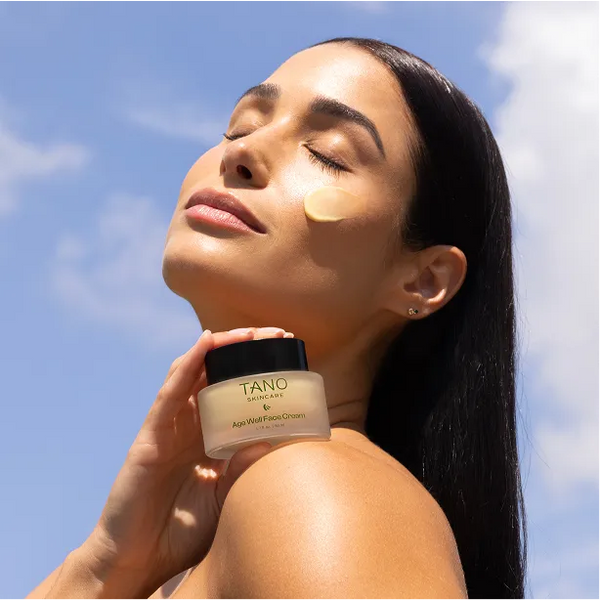
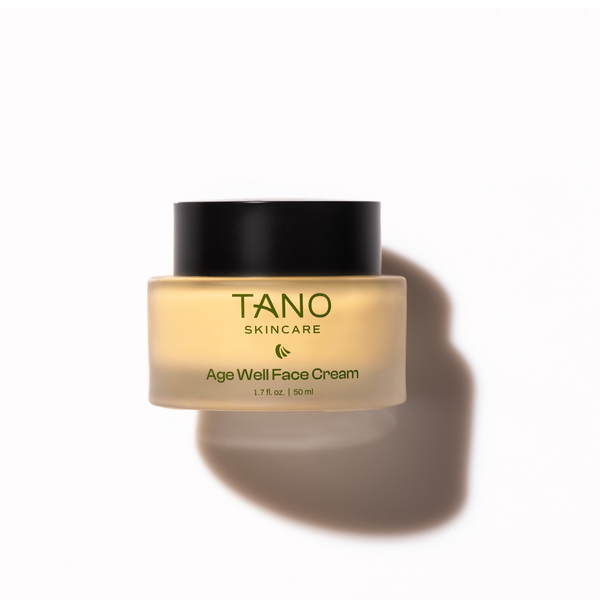
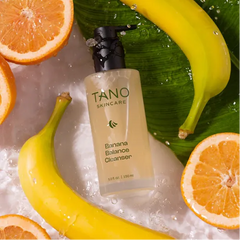
Banana sap - from the pseudo stem of the plant - has a long history in indigenous remedies for wounds and skin irritation, and Tano is based on our closer look at it in the lab. The most striking data point for eczema and sensitive skin comes from a microarray gene expression analysis of banana sap, which produced over 1,400 significantly modulated genes (p<0.05).
Tano's research has shown that banana sap produces a 90% reduction in IL-8, alongside drops in other mediators like IL-17C and CCL24, through gene-expression testing. A downregulation profile that lines up strikingly well with what dermatologists want to see in an anti-inflammatory ingredient for eczema-prone skin.

"I developed eczema in my 20's and would get flare ups really bad underneath my eyes, ears, and sometimes even in my hairline. Honestly, that's why I was so excited to try Tano because I had been wanting to amp up my anti-aging skincare, but knew retinol would absolutely destroy my sensitive skin. I've been using Tano for over a year now, and I'm so happy to report that I haven't had a flare up, which is life-changing!"
The Takeaway
The eczema-IL-8 connection is well established: this chemokine is a genuine driver of flare severity and a legitimate marker doctors and researchers use to track treatment response. Banana-derived compounds already have real support in the published literature for reducing IL-8 and related inflammatory markers, and Tano's early gene expression data on banana sap specifically (now heading toward peer review) points in the same direction, with a notably large and broad-based effect. It's an active worth watching closely as that research makes its way to publication.
This article is for informational purposes only and isn't medical advice. Talk to a dermatologist or healthcare provider about the right treatment plan for your skin.
Sources:
- Interleukin-8 content in the stratum corneum as an indicator of eczema severity
- IL-8 and skin inflammation - BIOS journal
- IL-8 in atopic dermatitis - PMC
- Journal of Allergy and Clinical Immunology - IL-8 and AD
- National Eczema Association: immune system research
- Anti-inflammatory effects of banana peel extract on acne vulgaris (IL-8 reduction)
- In vitro evaluation of bioactive properties of banana sap - Biologia (Springer)
Featured in this article


